
The Supreme Court on Wednesday allowed banks and financial institutions to provide services related to cryptocurrencies by setting aside the RBI's 2018 circular which had prohibited them. A three-judge bench, headed by Justice R F Nariman, said the Reserve Bank of India circular is liable to be set aside on the ground of "proportionality". "Accordingly, the writ petitions are allowed and the circular dated April 6, 2018 is set aside," said the bench, also comprising justices Aniruddha Bose and V Ramasubramanian.

Penalty must act as a deterrent. If it is too low, it could encourage the regulated entities to lap up penalty instead of complying with the norms, suggests Tamal Bandyopadhyay.

The Reserve Bank on Thursday permitted banks to increase charges for cash and non-cash ATM transactions beyond free monthly permissible limit from next year. Bank customers will have to pay Rs 21 per transaction, instead of Rs 20, with effect from January 1, 2022, if they exceed the monthly limit of free transactions. "To compensate the banks for the higher interchange fee and given the general escalation in costs, they are allowed to increase the customer charges to Rs 21 per transaction. "This increase shall be effective from January 1, 2022," the RBI said in a circular.

The retail inflation eased to a four-month low of 4.87 per cent in October, mainly due to cooling prices of food items, government data showed on Monday. The Consumer Price Index (CPI) based retail inflation fell to a three-month low of 5.02 per cent in September. The previous low inflation was recorded at 4.87 per cent in June.
The Reserve Bank of India (RBI) on Friday kept key repo rate unchanged at 4 per cent in view of rising inflation and faint signs of economic growth amid gradual lifting of coronavirus (COVID-19) lockdown. The central bank's newly-constituted monetary policy committee (MPC) began its three-day meeting on October 7 and maintained the stance as accommodative. It also kept the reverse repo rate unchanged at 3.35 per cent.

This is the second high profile resignation in the past six months at the Reserve Bank of India.

With retail inflation witnessing significant uptick in May, the Reserve Bank of India (RBI) is likely to maintain status quo in its August monetary policy review, according to a report. According to the SBI's research report- Ecowrap, inflation may remain elevated in the coming months due to several global and domestic factors. "We expect a status-quo in August. We believe RBI would still try to find a marriage of convenience of regulatory and developmental measures and monetary policy in August policy," the research report said on Wednesday.

India's economic growth is estimated to have slowed down to 11-year low of 5 per cent during the current financial year ending March 2020.

Retail inflation declined to a three-month low of 5.1 per cent in January, mainly due to subdued prices of vegetables, fruits and other food items, according to government data released on Monday. The fall indicates that retail inflation is inching towards the Reserve Bank's comfort level of 4 per cent. The Consumer Price Index (CPI) based inflation was on the rise for two straight months after touching a trough of 4.9 per cent in October 2023. In December, it stood at 5.69 per cent.

Y H Malegam, 80, will head the panel that will look into non-performing bank assets and their relation to the Rs 114-bn PNB scam.
Central banking is a science, not an art, Tamal Bandyopadhyay tells RBI Governor Shaktikanta Das.

Fitch Solutions sees RBI keeping benchmark interest rates unchanged during the fiscal to March 2022 following its decision to buy Rs 1 lakh crore of government bonds. "We had initially expected another policy rate cut to arrest the rise in government bond yields since the Union Budget announcement in February. "However, having an explicit bond purchase guidance from the RBI following the announcement of the G-SAP will also achieve a similar effect, if not even be more effective than a rate cut on capping the increase in bond yields," it said in a note. The Reserve Bank of India (RBI) held its policy repurchase (repo) rate unchanged at 4 per cent at its monetary policy meeting on April 7.

The Reserve Bank's rate-setting panel began its three-day deliberations on Monday to decide the next monetary policy amid expectations that the central bank will maintain status quo on the benchmark interest rate in the backdrop of global scare due to the new coronavirus variant Omicron. Reserve Bank Governor Shaktikanta Das headed six-member Monetary Policy Committee (MPC) is scheduled to announce the policy resolution on Wednesday. If the RBI maintains status quo in policy rates on Wednesday, it would be the ninth consecutive time since the rate remains unchanged.
The Reserve Bank of India (RBI) unions have decided to intensify their stir demanding revision of wages, pending since November 2017, and have called for mass casual leave of employees at the central bank on November 30. However, several sources in the RBI told Business Standard that the unions may not have to go on agitation, as the new contours of the wage pact have been almost finalised and could be announced any time. An email sent to the RBI was not answered. The United Forum of Reserve Bank Officers and Employees had deferred its agitation earlier after it was told that RBI Governor Shaktikanta Das was to hold talks with the human resource management department (HRMD).
Rs 5,000 crore additional liquidity facility to be provided by the National Housing Bank to boost liquidity in housing sector, the RBI said.
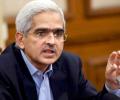
The rising COVID-19 infections across the country are a matter of concern, but it may not impact the ongoing economic revival as one does not foresee lockdowns, Reserve Bank Governor Shaktikanta Das said on Thursday. The economic revival will continue "unabated", Das said, asserting that there is no need for a downward revision of RBI's 10.5 per cent GDP growth forecast for FY22. Speaking at Times Network's India Economic Conclave, Das said, "We have 'insurance' to protect economic revival like a fast-paced vaccination drive, greater ability among people to follow COVID protocols", and one does not see lockdowns as well.

The central bank filed an affidavit in response to a petition filed by Kochhar last month, challenging her ouster as the chief executive and managing director of ICICI Bank months after she voluntarily left the private sector lender. The bank, while terminating her employment, also denied her remuneration and rescinded the bonuses and stock options given to her from April 2009 to March 2018. She was accused of playing a role in grant of out-of-turn loans of Rs 3,250 crore to Videocon Group, which allegedly benefited her husband, Deepak Kochhar.

'Banks are being encouraged to lend instead of parking their resources with the RBI and earn risk-free interest income,' points out Tamal Bandyopadhyay.

Concerned over elevated inflation, Reserve Bank of India on Friday decided to leave the benchmark interest rate unchanged at 4 per cent but maintained an accommodative stance, implying more rate cuts in the future if need arises to support the economy hit by the Covid-19 pandemic.

In order to provide an impetus to digital funds movement, it has been decided to do away with the charges levied by the RBI for transactions processed in the RTGS and NEFT systems, RBI said.
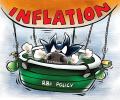
The Reserve Bank of India on Friday raised the retail inflation forecast for 2021-22 to 5.7 per cent due to supply side constraints, high crude oil and raw materials cost. The RBI in June had pegged the retail inflation estimate at 5.1 per cent for the current financial year. The RBI has the mandate to keep inflation in a band of 2-4 per cent, with a tolerance level of 2 per cent on either side.

Equity benchmark Nifty scaled the psychological milestone of 21,000 in afternoon trade on Friday, and the Sensex touched its all-time intraday high of 69,888.33 after the central bank's decision to keep policy rates unchanged in line with market expectations. The 50-share benchmark index opened on a bullish note, after taking a breather on Thursday, and rose to 21,006.10. As many as 25 stocks were trading in the green, and 24 stocks defied the broader market and were trading in the negative territory.
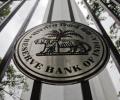
The Centre's proposal to call for governance reform in the RBI could, however, take a back seat, a source privy to the development said.

Global trends, macroeconomic data, and the outcome of the US Fed policy meeting are the major factors that will drive the movement in the domestic equity markets this week, analysts said. "In the upcoming data-centric week, the focus will be on crucial releases, including inflation data from India and the US. "Indian inflation is expected to rise, while US inflation will remain steady.

The Reserve Bank on Friday approved the transfer of Rs 99,122 crore as surplus to the central government for the accounting period of nine months ended March 31.
The RBI on Wednesday provided more time to exporters to collect payment of goods and software sold to overseas buyers and repatriate that to India, as the central bank announced more measures to deal with the economic fallout of the Covid-19 pandemic. The central bank has also decided to increase the limit of advances it gives to states and UTs by 30 per cent under the Ways and Means (WMA).

A high-level panel led by former RBI governor Bimal Jalan, set up to decide the appropriate capital reserves that the central bank should maintain, on Wednesday finalised its report.

The economy may grow by around 7 per cent this financial year as estimated by the Monetary Policy Committee (MPC) of the Reserve Bank of India (RBI), say economists with various organisations. The first advance estimates for 2023-24 will be released on Friday by the National Statistical Organisation (NSO), an exercise done for calculating ratios such as the fiscal deficit. The interim Budget will be presented on February 1.

Retail inflation declined to a five-month low of 4.85 per cent in March mainly due to cooling food prices, inching towards the Reserve Bank's target of 4 per cent, according to official data released on Friday. The Consumer Price Index (CPI) based retail inflation was 5.09 per cent in February and 5.66 per cent in March 2023. Previously, CPI-based inflation was the lowest at 4.87 per cent in October 2023.

The government on Wednesday asked the Reserve Bank to maintain retail inflation at 4 per cent with a margin of 2 per cent on either side for another five-year period ending March 2026. To control the price rise, the government in 2016 gave a mandate to the RBI to keep the retail inflation at 4 per cent with a margin of 2 per cent on either side for a five-year period ending March 31, 2021.

'If Urjit Patel had resigned after the five-state elections results people would have taken a different view. So this was the right time for him to resign.' 'He rightly resigned as he felt the differences with the government were not getting settled.'

RBI Governor Shaktikanta Das has assured Finance Minister Nirmala Sitharaman that the Rs 12.05-trillion gross borrowing programme for FY22 will go through smoothly.

The finance ministry has received about 100 applications for the post, which have been sent to the high-level panel that will select a suitable candidate for the post, sources said.
Analysts say RBI will cut rates because the liquidity crunch that began this time last year is still hurting the economy and also with an eye on the August industrial production numbers, which showed a contraction by 1.1 per cent -- the steepest in seven long years.

RBI has cited at least 10 areas where it has no control over PSBs.
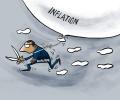
Most members of the Reserve Bank of India's monetary policy committee (MPC) decided to stick to the course on bringing retail inflation to the target of 4 per cent while voting for maintaining status quo in the April review, except external member Jayanth Varma who voted for a 25 bps cut in the repo rate. "I believe that the extant monetary policy setting is well positioned," RBI governor Shaktikanta Das said in the minutes of the policy review, which came out on Friday. "Monetary policy transmission is continuing and inflation expectations of households are also getting further anchored.

'Trust your new governor,' Omkar Goswami advises RBI Deputy Governor Viral Acharya. 'Just because he is from the IAS and doesn't carry a PhD from a US university does not make him unsuitable for the task.' 'If anything, Das will pour oil on troubled waters, and save the RBI's reputation.'

As deputy governor, Patel headed the RBI panel to draft the monetary policy report, which became the basis of the ongoing reforms at the apex bank

Let's wait for the monetary policy on February 8 -- to see how it complements the fiscal commitments, points out Tamal Bandyopadhyay.

India decisively withstood global headwinds in 2023 and is likely to remain as the world's fastest-growing major economy on the back of growing demand, moderate inflation, stable interest rate regime and robust foreign exchange reserves. Despite widespread pessimism witnessed among the developed nations and the worsening geopolitical situation, India recorded a gross domestic product (GDP) expansion of 6.1 per cent in the March quarter. The growth moved up to 7.8 per cent in the June quarter and was 7.6 per cent in the September quarter. For the first six months of this fiscal, the growth was 7.7 per cent.
 © 2026 Rediff.com - Advertise with us - Disclaimer - Privacy Policy - Sitemap - Feedback - About us - Terms of use - Grievances